
AI search accuracy
What to do when AI search gets your business details wrong
A traveller rings to ask when you’ll reach their campsite. You stopped offering mobile repairs two years ago. They tell you an AI search said you still do. Before you rewrite the website, find out exactly what they were shown and which source a customer can still open.
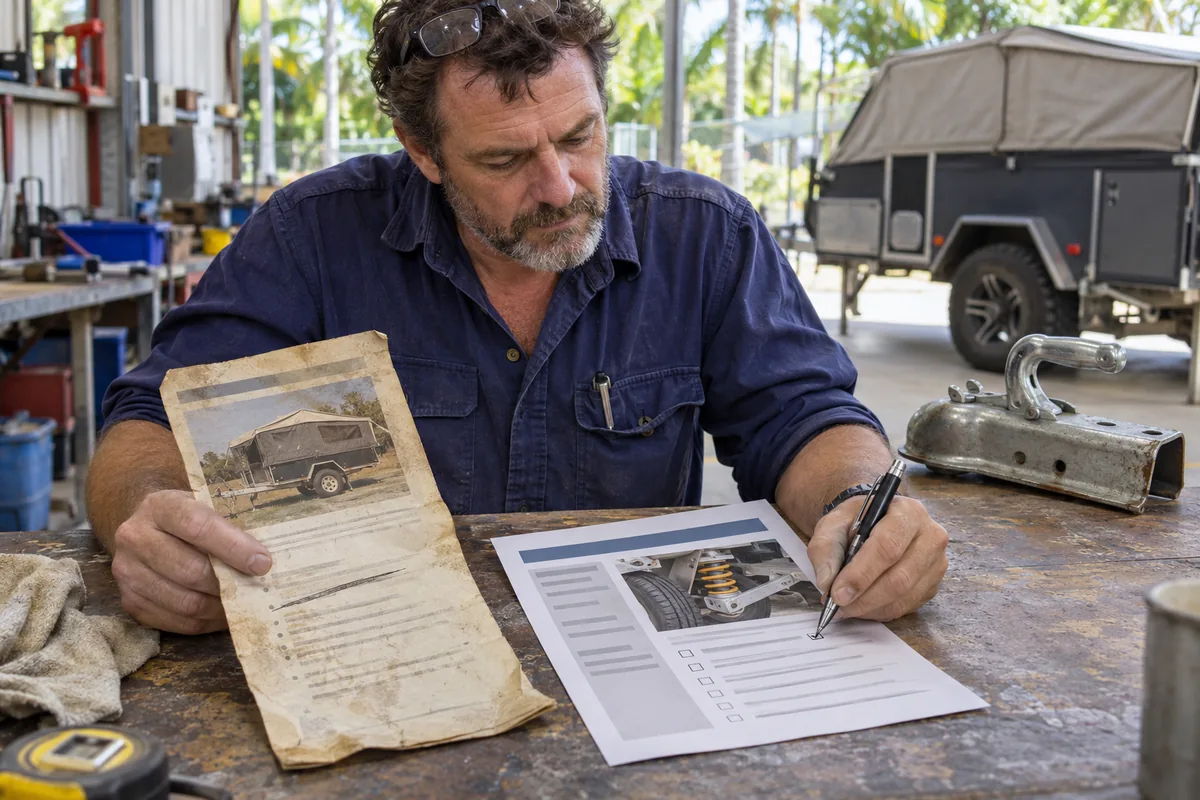
Save the claim before trying to correct it
Which sentence would make a customer do the wrong thing? Start there. “They come to your campsite” could send a traveller down the wrong track if the business now takes camper trailers at its workshop only. Whether an AI answer sounds flattering is beside the point. Someone needs to know where to take their trailer.
Write down the question exactly as asked, the service and town you meant, the platform, the date and the sentence that was wrong. Note whether web search was used and open any sources displayed beside the claim. Check the business name, suburb and contact details on the linked page. A similarly named operator in another state is a different problem from an old brochure published by your own business.
Confirm the current arrangement with the person who actually books the work. Record a sentence they can stand behind. A clear statement like “All camper-trailer canvas repairs are assessed at our Nambour workshop by appointment” gives the web editor something concrete to publish. It also gives reception a consistent answer today.
Follow a workshop-only repair back through three sources
Imagine a Sunshine Coast camper-trailer repairer who used to take call-outs. The team now books canvas repairs into its Nambour workshop. A customer says ChatGPT recommended the business for mobile repairs at a campsite. Here are three things I might find, and what I’d do with each. This is a worked example.
| What I find | Why it matters | What I would change |
|---|---|---|
| The live repairs page says “we come to you”, but the booking form asks customers to bring the trailer in. | The business’s own website offers two different arrangements. Someone could make the wrong booking whichever source they read. | Ask the workshop to confirm the rule, put it beside the service description and booking button, and check the confirmation message. |
| A club directory links to an old downloadable brochure promising mobile call-outs. | A reader can still open and share the original document even if the menu no longer links to it. | Update the business’s copy and its public links. If a current document replaces it, make the old address lead to the useful replacement where appropriate. Ask the club to update its listing and link. |
| The linked page belongs to a different repairer with a similar name. | Changing a service the other repairer genuinely offers would create another error. | Make this business’s name, workshop location and booking route easy to identify on its own pages. If feedback is available on the answer, include the mistaken match and the correct public link. |
A citation tells you which page was shown as a source. Read it before assigning a fix. If the page never mentions campsite repairs, record that the claim is unsupported by that page. You may have found a bad summary rather than a page that needs rewriting.
Put the correction where people can use it
I’d start with the URL a customer can act on. For the repairer, that is the canvas repairs page. It needs the current assessment location, whether an appointment is required, and what to send first. If an old PDF still ranks or appears in estimates emailed to customers, open the exact public file and check the wording there too. A replacement sitting on an office computer hasn’t changed what a customer can download.
Someone else owns the next source? Make the edit easy to approve. This is the sort of note I’d prepare for the owner to send to the club directory:
Your camper-trailer repairs listing says we do mobile call-outs. We now assess canvas repairs at our Nambour workshop by appointment. Could you update that line and link to our current repairs page? I’ve included the listing address and the current service page below so you can check both.
Keep a short record with the wrong statement, the confirmed wording, the page address, who can edit it and the date you saw the correction in public. “Requested from the club” and “live on the club listing” belong in separate rows or statuses. Where an old page must move, my URL mapping and migration service explains how I choose a useful destination.
Check the published fact, then repeat the customer’s question
Open the corrected page directly from the original link, preferably on a phone. Can someone tell where to bring the trailer before they tap the button? Check the linked document too. If you manage the page in Google Search Console, URL Inspection can request indexing after a material change. Google chooses when to recrawl and what to show. Repeated submissions do not give the same address priority.
Then run the original question again with the same business name and location, using a fresh conversation where applicable. Record the new answer and sources. Ask a second, neutral version such as “Where does this business assess canvas repairs?” If one answer is correct and the other still offers call-outs, keep both observations. Specifying the official URL in a separate test can help check whether the page is clear, but that is a different test from what an ordinary customer sees.
If Google’s AI features or ChatGPT still show the wrong fact, the business can keep its own booking journey accurate while checking the remaining evidence. I’d also ask reception to tally misdirected call-out enquiries for a comparable period. A decline can be encouraging, but a single corrected answer cannot tell you how many customers saw it or why enquiries changed. My AI search visibility review covers the wider investigation when the same error turns up repeatedly.
Common questions
Can I edit what ChatGPT says about my business directly?
You can correct the pages you control, ask other publishers to correct factual mistakes and use the feedback option where available. A correction inside one conversation does not give you control over what other people will see.
What if the AI answer gives no sources?
Save the exact wording and whether web search was on. Search for the disputed phrase alongside your business name and town, then check the main service page, public profiles and downloadable files. Record any likely source as a lead until you can verify it.
Do I need a special AI file or new schema to fix an outdated service?
Start with the incorrect public statement and the customer’s booking route. Google’s guidance for its generative search features does not require special AI markup. If you already publish structured data containing the wrong fact, update it along with the visible page.
Should I delete an old PDF that people still use?
Check how people reach it and what information remains useful. A current replacement at the same address may be simplest. If it belongs at a new address, deal with the old link and update the places that distribute it. Keep any historical copy you need clearly distinguished from current booking information.
What should I send you if an AI answer is wrong?
Send the exact question, the disputed sentence, the sources shown, the date and the current public page that confirms the right answer. Leave private chats and customer details out. I can then check which source needs attention and who can change it.
Which sentence is sending customers in the wrong direction?
Send me the question, the claim, the public links shown and what customers should be told instead. I can trace the discrepancy and give you a specific correction to make or request.