
Paid advertising guide
Google Ads or Meta Ads for your service business?
Start with the moment a customer needs you. Someone searching for an air-conditioning repair is in a different frame of mind from a homeowner considering an upgrade while scrolling through Instagram.
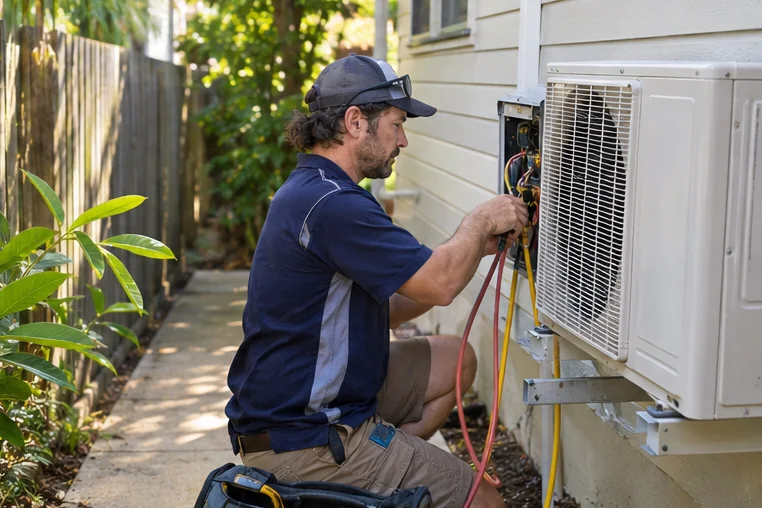
What is the customer doing when they see the ad?
Google Search Ads can reach someone who types a service into Google. “Air conditioner blowing warm air Nambour” tells you quite a bit about the problem. A relevant repair page, an accurate service area and a phone someone answers can make that click worthwhile.
On Facebook or Instagram, the same homeowner might stop at a photo showing where a quiet split system fits in a small bedroom. They could be weeks away from requesting an installation quote. The creative has to explain why they should care now. A repair hotline and a planned installation are different offers even when the same technician does both.
Match the channel to the job
| If the job looks like this | A sensible first test | What to check |
|---|---|---|
| Urgent repair with an identifiable search | Google Search Ads for specific repair terms, with an urgent-service landing page. | Open hours, call handling, search terms and areas where you can dispatch. |
| Planned upgrade with a visual result | Meta Ads showing an approved installation and inviting owners to describe their room. | Image rights, form questions, qualified projects and time to reply. |
| Specialist service with an ambiguous name | Interview recent customers and inspect Search Console queries before choosing. | Whether the words people use for the problem differ from your trade terminology. |
Location settings deserve a close look. Someone researching a move to the Sunshine Coast can be a good prospect for one service and a wasted click for another. Check the geographic options and your actual lead suburbs. A targeting radius alone cannot tell you whether the job is viable.
Compare the cost of a suitable enquiry
Suppose two tests each use $400 in ad spend. Google Search brings eight enquiries, five of which fit. Meta brings twenty enquiries, four of which fit. That works out to $80 per suitable Search enquiry and $100 per suitable Meta enquiry. The raw costs per submission are $50 and $20 respectively. These are illustrative figures.
Give each channel the same definition of “suitable” and enough time for someone to return calls. If two Search enquiries and two Meta enquiries become paying jobs, the media cost per customer is $200 for each. Management fees, creative costs and the margin on those jobs still matter. You can try your own figures in my lead-quality calculator.
Run a test you can learn from
Write down the offer, geography, available spend and who will follow up. Pick one service and one primary outcome. Keep a short record of enquiry source, suitability, quote and booking. Review unsuitable leads for a pattern before rewriting the whole campaign.
If the budget only supports one meaningful test, choose the channel that matches how customers already buy. Bring me a sample of recent enquiries and your landing page if you want help with that decision or with the Facebook and Instagram side of the work.
Common questions
Is Google Ads always better for trades?
An emergency call-out and a planned kitchen renovation have different buying journeys. Check whether a customer is already searching, what they search for and whether a photograph helps them recognise the value.
Should a small business split its budget evenly?
An even split can leave too little evidence on either channel. Begin with a test you can fund and service, then decide what a second channel would help you learn.
Can both channels use the same landing page?
Yes, if the offer, proof and next step suit both visitors. An urgent phone enquiry and a considered project quote often deserve different routes.
How do I compare calls with instant forms?
Use a common outcome, such as contactable enquiries matching the service area. A tap on a phone link and a completed conversation belong in different columns.
What if we receive leads but few become customers?
Look at missed calls, time to first reply, unsuitable areas and quote follow-up. Changing platforms will have limited value if the same bottleneck follows every lead.
Which job are you trying to win?
Send the service, its location and a recent example of a suitable enquiry. I can help you choose a sensible first test.